
Okay, real talk: I once watched a six-figure position evaporate in ten minutes because a single approval went sideways. Whoa! That feeling — total knot in your chest — stuck with me. My instinct said something felt off about the UI, but I clicked anyway. Seriously?
Here’s the thing. DeFi risk isn’t a single monster you can slay with a checklist. It’s a cluster of small, avoidable mistakes plus rare, catastrophic failures. Medium-sized problems add up. Long, messy edge-cases are the real killers, the ones that live in race conditions, oracle aberrations, and weird multisig governance plays that only show up under stress, though actually those are exactly the scenarios where simulation and good tooling shine.
Initially I thought audits were the end-all. But then I realized audits are a snapshot — not a warranty. Actually, wait—let me rephrase that: audits raise the bar, they reduce some classes of risk, but they don’t simulate the future. They don’t tell you what a design with complex economic incentives will do at scale, or how a new front-end will trick users into signing dangerous allowances. On one hand audits give confidence; on the other hand they can create complacency.
So what do you defend against? Think in three buckets: protocol risk (design & economic models), contract risk (bugs and upgradeability), and interaction risk (your wallet, the UI, and transaction semantics). Hmm… it sounds obvious, but most people only focus on one. That’s how smart money gets nicked.
Start with threat modeling — fast and rough
Do a lightweight threat model before you interact. Ask: who benefits if this tx happens, and who benefits if it fails? Short sentence. Who can reconfigure contracts? Who can mint or pause? Figure out the blast radius of a compromised private key. Your answers should change how much scrutiny you give a transaction.
One practical trick: categorize the action. Is this a read-only call? A swap? An approval? Moving funds? Each category has different threat vectors. Approvals are stealthy and pernicious because they persist. Swaps are time-sensitive and vulnerable to slippage and frontrunning. Moving funds is obvious and needs the highest bar. My bias is to treat approvals like permissions — because they literally are.
Check provenance. Where did you find the dApp link? Was it a curated list or a random tweet? If it came from a telegram group — be twice as careful. Something about a crowd-chat link screams “verify twice.” I’m not 100% sure, but my experience says 9 out of 10 scams start with sloppy link hygiene.
Use transaction simulation and preview tools
Wow! Transaction simulation turned out to be a game-changer. A simulation gives you an execution trace and expected state deltas before signing. That matters when a contract does two things at once: it might transfer your token and then call a bridge, or it might change allowances in the same flow. Seeing that ahead of time is huge.
Tools that simulate provide two immediate wins: they warn about unexpected token transfers and they decode calls so you can see intents — not just raw hex. But keep this in mind: simulation depends on the RPC and the mempool state you simulate against. On a congested chain, reality can diverge. So simulation reduces, not eliminates, uncertainty.
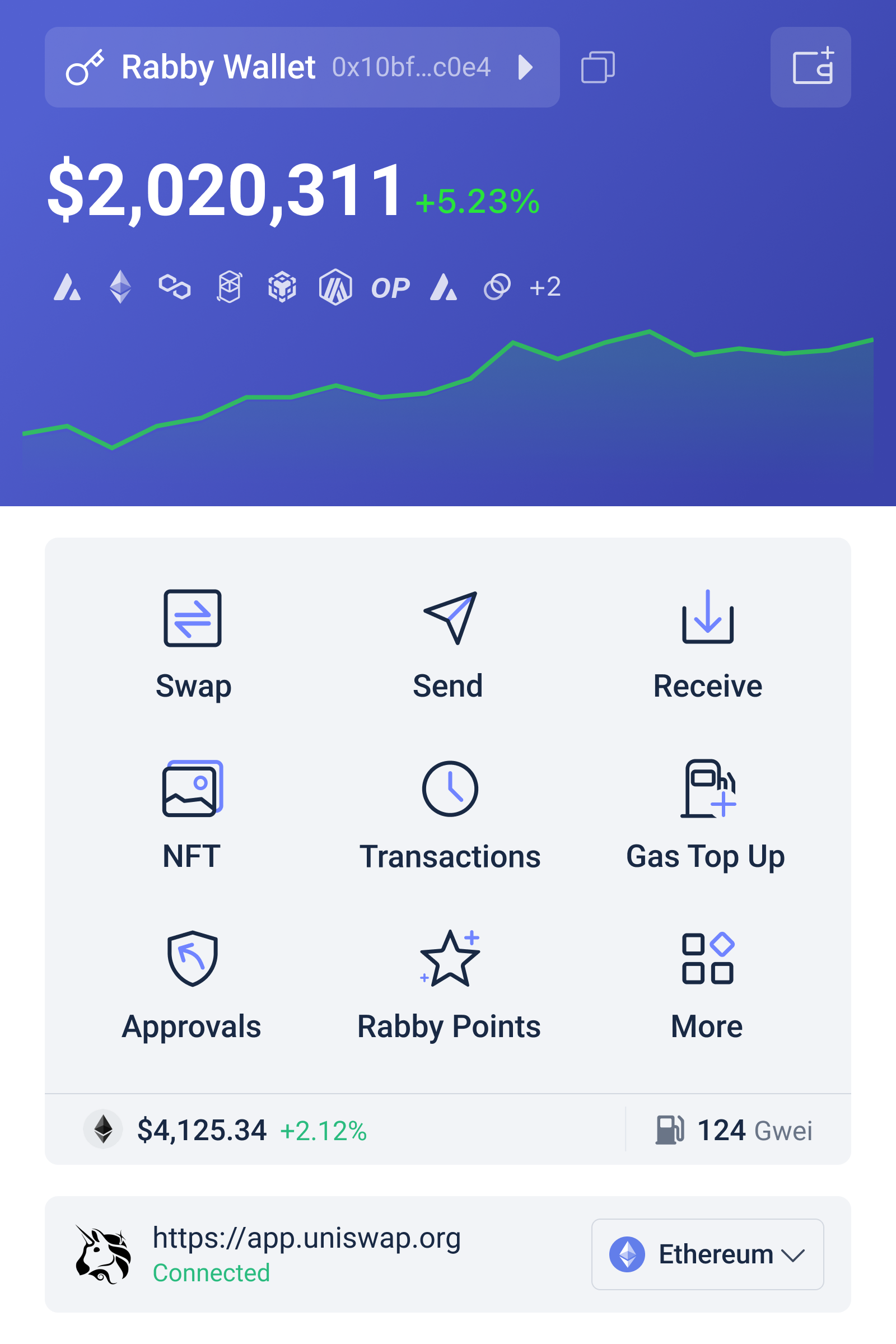
I use dedicated wallet features for this. For example, when my workflow demands advanced previews I reach for a wallet that offers transaction simulation and a contract call decoder — that extra context is gold. If you haven’t tried rabby, check it out — it was one of the first wallets I adopted for its transaction previews. (oh, and by the way…)
Approve smartly — smallest effective allowance
Approvals deserve rules, not hope. Rule one: give the smallest effective allowance required. Rule two: prefer one-time approvals when the UX supports it. Rule three: monitor and revoke stale allowances periodically. These are low-effort, high-impact steps.
Also: consider using intermediary contracts for high-value interactions. A per-interaction proxy can limit the exposure of your main wallet. That adds friction, sure, but when you’re protecting five figures it’s worth the two extra clicks. I’m biased, but this part bugs me — people treating allowances like paper napkins.
Operational hygiene — the boring but effective stuff
Keep separate wallets for different roles. Small hot wallet for day trades. Cold or multisig for long-term holdings. Yes, it’s extra work. Yes, it reduces your chance of an oops. On one hand many users hate managing multiple addresses; though actually the security payoff is real and immediate.
Use distinct RPC endpoints and rate-limit your scripts. Avoid unknown wallets and extensions running alongside your primary wallet. There are too many extensions with overlapping permissions. Disable, disable, disable. Also: lock down ENS reverse records for your important addresses — sneaky social engineering sometimes uses name confusion.
Nonce management: it’s subtle. If you use multiple interfaces with the same key, you can unintentionally create stuck transactions or get front-run into submitting a conflicting tx. Some wallets help with nonce control — that helps, especially when you’re moving large positions quickly.
When interacting with complex DeFi protocols
Read the docs. Yes, again. But read the parts about upgrade patterns, admin keys, and emergency functions. If a protocol can be paused or has a central timelock, you should know the implications. Timelocks are good, but short timelocks or privileged multisigs can still be risky.
Stress-test mentally: imagine a 10x gas spike and a market crash. How does liquidation behave? Who can halt it? Where’s the collateral? This mental simulation reveals emergent risks that static audits miss. It’s not perfect. But it’s better than trusting a dashboard’s green badge.
Also watch on-chain history. Has the contract been interacted with widely? Is there a pattern of rushed upgrades? Repeated emergency interventions are a red flag — that’s a pattern, not a one-off.
Questions I get asked a lot
How reliable are transaction simulations?
Simulations are reliable for decoding intent and showing state deltas against the simulated block, but they cannot predict future mempool behavior or MEV front-running with perfect accuracy. Use simulations as a strong signal, not an ironclad guarantee. They’re a tool in your toolkit — very useful, but not omnipotent.
Should I always use a multisig?
For treasury or long-term funds, yes. For daily trading, no — multisigs add friction. The right balance: multisig for custody, hot wallets for active strategies, and clear procedures for moving between them.
I’ll be honest: perfect safety doesn’t exist. But layered defenses — threat modeling, cautious approvals, transaction simulation, operational hygiene, good wallet choices, and ongoing monitoring — shift the odds. You don’t need to be paranoid. You need to be methodical. Somethin’ like a seatbelt: you might never need it, but when you do, you’ll be really glad it’s there…